
In today’s competitive manufacturing landscape, every material decision impacts your bottom line. While many companies focus solely on upfront material costs, the true cost-effectiveness of any solution lies in its total lifecycle value—from sampling efficiency to production yields and product durability. This is where TPU (Thermoplastic Polyurethane) hot melt adhesive films are transforming industries, offering a compelling economic case that goes far beyond price per kilogram.
The Real Cost Drivers: Beyond Raw Material Prices
Let’s start with a reality check. In 2023, conventional solvent-based adhesives accounted for approximately 60% of the global adhesive market, but they come with hidden costs: VOC compliance, ventilation systems, longer curing times, and inconsistent bond lines. TPU hot melt adhesive films eliminate these variables entirely.
The Numbers Speak: A leading European automotive interior supplier reported a 32% reduction in overall lamination costs after switching from liquid adhesives to TPU films in 2022. How? By cutting energy consumption (no drying ovens required), reducing scrap rates (precise film thickness), and accelerating production cycles (instant bond upon cooling).
1. Sampling Efficiency: Cutting Development Time by 40%
One of the most overlooked cost factors is the sampling phase. Traditional adhesive development can take weeks, consuming resources and delaying time-to-market. Xin Gen Tech has addressed this pain point head-on with our 400mm wide lab-scale sampling line that mirrors our mass production systems 1:1.
Why this matters for your budget:
Fast sampling lead times – Get prototypes in days, not weeks
Low sampling costs – Test multiple formulations without full-scale production runs
Consistent quality – What you sample is exactly what you’ll get in mass production
Actionable Tip: When evaluating TPU film suppliers, always ask about their sampling infrastructure. A supplier with lab equipment that closely simulates production conditions will save you thousands in rework and redesign costs. This is precisely why our customers in the medical device sector—where precision is non-negotiable—have reported 25% faster project evaluations since switching to our sampling system.
2. Production Efficiency: Higher Yields, Less Waste
TPU hot melt films offer a decisive economic advantage on the production floor. Unlike liquid adhesives that require precise application rates and can suffer from uneven coating, TPU films provide:
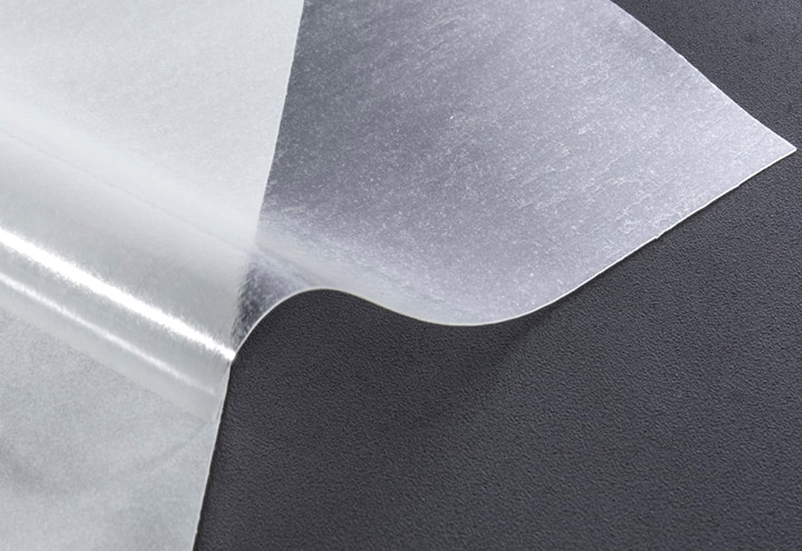
Uniform thickness control – Typically ±0.01mm, ensuring consistent bond strength
Zero solvent recovery costs – No need for expensive VOC capture systems
Higher line speeds – Lamination occurs through heat and pressure, not extended curing
Case in Point: A Brazilian manufacturer producing bulletproof glass lamination faced severe bonding challenges between polycarbonate and glass. After switching to our high-adhesion TPU film with stable optical clarity, they successfully passed lamination testing and entered pilot production within weeks—a process that previously required multiple iterations with liquid adhesives. The result: lower material consumption per unit and dramatically reduced rejection rates.
3. Product Durability: Lower Warranty Claims
The cost-effectiveness equation doesn’t end at production. Inferior bonding leads to product failures, returns, and warranty claims—all of which eat into your margins. TPU films excel in demanding applications:
In Automotive – Paint protection films made from TPU resist scratches, stone impacts, and yellowing, extending vehicle protection for up to 10 years. Compare this with cheaper alternatives that degrade in 2-3 years, and the lifecycle cost becomes undeniable.
In Textiles – TPU films laminated with polyester fibers create waterproof yet breathable fabrics used in outdoor gear and medical protective clothing. Durability here means fewer replacements, which for institutional buyers like hospitals or military procurement is a critical cost factor.
Data point to consider: A study conducted in 2023 on school uniform fabrics treated with TPU membranes found they outlasted conventional coated fabrics by 3.2 times in abrasion resistance tests. For a school system replacing uniforms annually, switching to TPU-based fabrics could reduce procurement costs by 60% over a four-year period.
4. Automation-Driven Savings
Modern manufacturing is increasingly automated, and TPU films are inherently automation-friendly:
Easy roll-to-roll processing – Film format suits high-speed lamination lines
Precise placement – Die-cut films can be positioned exactly where needed, reducing material waste by up to 90% compared to spray adhesives
Clean processing – No residue buildup on equipment means less downtime for cleaning
Implementation strategy: For electronics manufacturers applying screen protectors, using self-healing TPU films on curved displays reduces lamination defects by 15% compared to traditional PET films, according to internal quality data from a prominent Chinese electronics component supplier. Fewer defects translate directly to lower production costs and less customer dissatisfaction.
5. Compliance and Certification: Avoiding Costly Pitfalls
Regulatory non-compliance can bankrupt a business through fines, recalls, and lost market access. With ISO 9001:2015, OHSAS 18001:2007, and certifications including OEKO-TEX, SGS, ROHS, REACH, FDA, and EU 10/2011, Xin Gen Tech ensures that our TPU films meet the most stringent global standards.
The cost implication: When your material supplier is already certified, you bypass the lengthy and expensive qualification process. Our medical-grade TPU films, for instance, support wound dressings and catheters that require FDA compliance—saving our medical clients countless hours of regulatory validation.
6. Expert Support as a Cost-Saving Tool
Finally, the best cost-saving strategy is working with a partner who understands your application deeply. Since our establishment in 2009, Xin Gen Tech has developed solutions for clients across clothing, outdoor products, electronics, automotive, and medical industries. Our R&D center in Shanghai and sales offices in Shenzhen and Los Angeles ensure we deliver localized support with global consistency.
Proactive approach: Ask your supplier about their technical support during sampling. Our team helps optimize thickness, hardness, and functional requirements, ensuring you start with the right formulation—not after multiple costly trial-and-error rounds.
Final Thoughts
TPU hot melt adhesive films are—by design—a cost-effective solution when evaluated through total lifecycle costing. The initial price per unit may be higher than solvent-based alternatives, but the cumulative savings from faster development, higher yields, superior durability, automation compatibility, and compliance assurance consistently outweigh the difference. In industries where bonding failure is not an option—from bulletproof glass to medical catheters—the value proposition becomes even clearer.
Bottom line for decision-makers: When you factor sampling efficiency (40% faster), production yields (15% higher), product lifespan (3x longer), and regulatory savings, TPU films are often the cheapest adhesive solution on the market. The key is choosing a reliable partner like Xin Gen Tech that can provide the technical infrastructure, certifications, and application expertise to maximize those savings. Your production line—and your CFO—will thank you.