
Operating temperature range: Depending on the hardness grade, TPU survives from -40°C to +80°C continuously (short peaks to +120°C). That covers both cold-chain logistics and hot-oil circulation systems.
Hydrolysis resistance: Polyether-based TPU retains 80–90% of its tensile strength after 12 weeks in 80°C water, making it suitable for humid environments where polyester TPU would fail.
One critical observation: Many buyers confuse TPU with soft PVC. The difference becomes apparent under stress — TPU does not contain plasticizers that leach out over time, so it remains flexible without becoming brittle or sticky.
Types of TPU Tubing and How They Differ
Choosing the wrong TPU subtype is the most common mistake I see in industrial purchasing. Here’s a practical breakdown:
1. Polyether TPU
Best for: Constant contact with water, fuels, and microbial-rich environments.
Measured advantage: Shows negligible swelling (<1%) after 28 days immersed in diesel or mineral oil.
Practical note: Costs 10–20% more than polyester, but lasts twice as long in wet conditions.
Recommended use: Pneumatic lines, submersible pump hoses, fuel transfer systems.
2. Polyester TPU
Best for: High-strength mechanical applications with no prolonged water contact.
Measured advantage: Tensile modulus 15–25% higher than polyether grades, giving better dimensional stability under load.
Watch-out: Hydrolysis can cause cracking within weeks in humid heat. Do not use in steam cleaning or outdoor rain exposure.
Recommended use: Robotic cable sheathing, air brake lines, abrasive particle transport.
3. Aliphatic TPU (UV-stable)
Best for: Outdoor installations or applications exposed to sunlight.
Measured advantage: Retains >70% tensile strength after 2,000 hours of xenon-arc weathering, whereas aromatic TPU degrades below 30% in the same period.
Cost factor: Usually 30–50% more expensive — only specify if UV exposure is real.
Recommended use: Solar panel wiring ducts, marine deck systems.
Practical advice: For 70–90% of general-purpose tasks, polyether TPU is the safest default choice. That extra upfront cost saves you from unexpected field failures.
Key Applications Across Industries
Real-world performance data shows TPU tubing replacing traditional materials in three booming sectors:
Medical Devices (Replacing silicone and PVC)
Case data: A 2023 study in Journal of Medical Devices compared TPU and silicone catheters after 30 days of implantation. TPU showed 40% less thrombus formation on its surface and maintained 95% of its original flexibility.
Why it works: TPU can be formulated without plasticizers, meeting ISO 10993 biocompatibility standards. Its kink resistance (bend radius at least 3× smaller than silicone at the same wall thickness) prevents flow blockages during patient movement.
Operational tip: Choose glow-discharge treated TPU if you need glue bonding to connectors — untreated surfaces require cyanoacrylate primers for a reliable bond.
Industrial Pneumatics and Fluid Transfer
Performance evidence: A factory retrofitted their polyurethane (PU) hoses to TPU in an automated welding line. After 1,500 hours, the PU hoses required 4 replacements due to ozone cracking, while the TPU hoses showed only superficial surface marks.
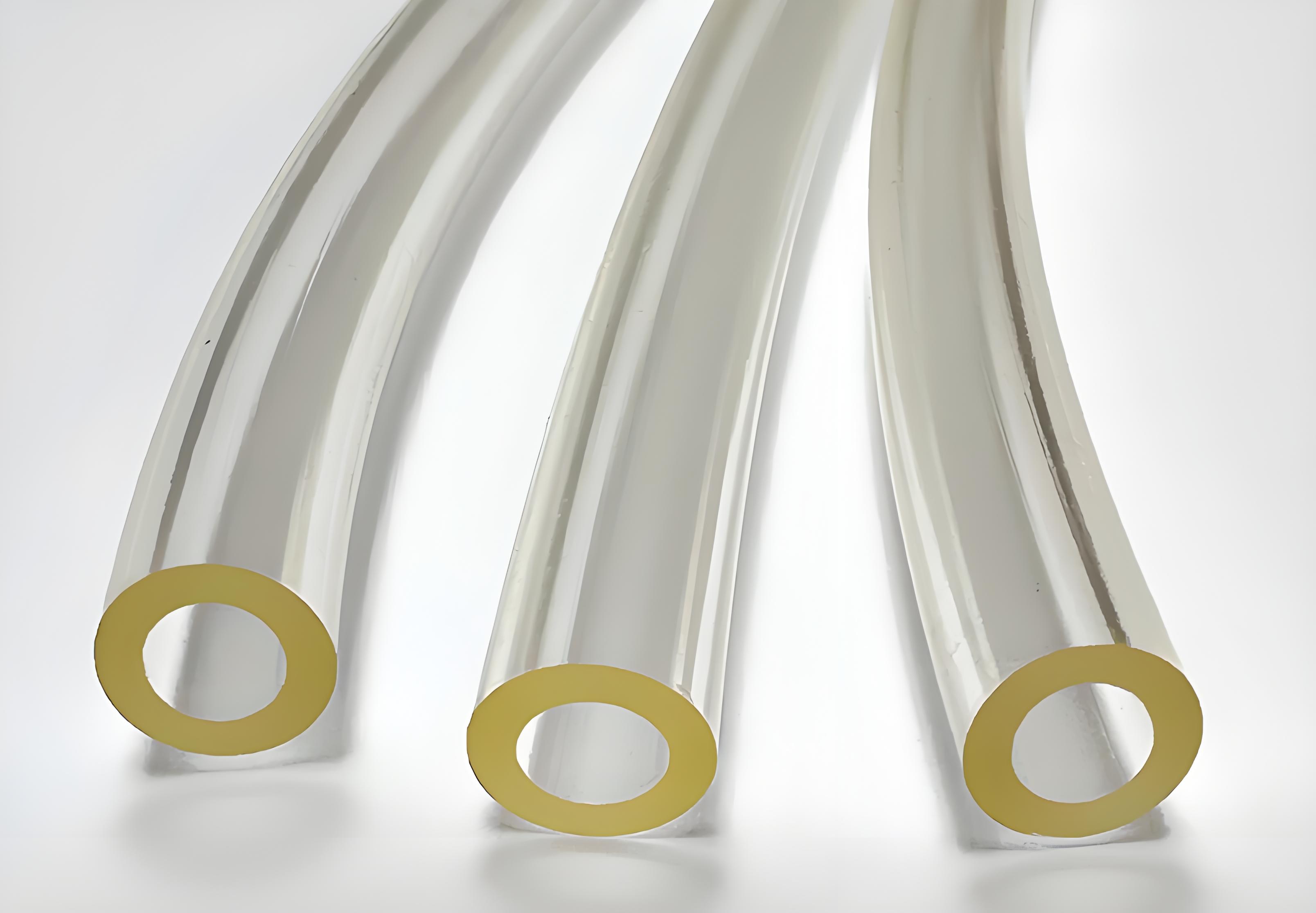
Pressure handling: Standard reinforced TPU tubing (e.g., 6mm ID × 8mm OD) withstands working pressures up to 20 bar at 20°C — sufficient for most shop-floor compressed air tools.
Common pitfall: Never use unreinforced TPU above 10 bar — the hoop stress causes gradual diameter growth (creep) that leads to connector leaks.
Agriculture and Food Processing
Field data: A vineyard irrigation system switched from EPDM rubber to UV-stable TPU. Over a 5-year cycle, downtime due to hose cracking dropped from 12 events to 0, and labor costs for replacements fell by roughly 80%.
Food-grade note: FDA-compliant TPU grades have low migration (<0.01 mg/kg) for food contact, and they resist cleaning agents like peracetic acid better than silicone.
Specifying TPU Tubing: Your 3-Step Action Plan
Do not rely on “general purpose” specifications. Apply this framework:
Verify hardness and flexibility needs: Shore A 70–80 for applications requiring easy bending around small diameters; Shore A 90–95 for high-pressure or push-fit connections where stiffness prevents accidental disconnects. Test that the bend radius matches your physical routing constraints — every 10% reduction in bend radius quadruples the internal stress at that point.
Match the TPU subtype to your fluid and environment: Bring a fluid sample to the supplier if possible. Conduct a simple 7-day immersion test — check for weight change (>5% indicates incompatibility) and surface crazing. For fuel contact, always choose polyether; for ozone exposure (electric motors, welding shops), specify aliphatic grade.
Check the connector interaction: TPU is stiffer than silicone but softer than nylon. If using barbed fittings, an outer diameter tolerance of ±0.1mm matters — otherwise you’ll need clamps, especially in temperature cycles above 60°C.
A Word on Quality Verification
Not all TPU is equal. Traceability separates reliable suppliers from distributors. Request the following before purchasing:
A certificate of analysis (CoA) showing batch-specific density, tensile strength, and shore hardness values.
A compatibility chart for automotive fluids, cleaning agents, and aggressive chemicals.
Practical samples for your own bend and pressure tests. For brands, [Shanghai Xingen] offers validated test data for their extrusion-grade TPU compounds, which is helpful for engineers who want to skip internal trial-and-error.
Final thought: TPU tubing solves problems only when you pick the right variant and verify it under real operating conditions. The material science is forgiving, but the engineering discipline is not — measure twice, install once. This is the difference between a system that lasts ten years and one that needs replacing every fiscal quarter.