
If you manufacture outdoor gear, medical products, or automotive interiors, you have likely encountered the same frustrating cycle: you need a TPU film that bonds perfectly to fabric, meets international safety standards, and arrives fast enough to keep your product timeline intact. The search often leads to China, but not all suppliers are built the same.

Here is what actually matters when choosing a TPU laminated fabric supplier, based on real capabilities and verifiable certifications rather than marketing claims.
1. Look for In-House Sampling That Mirrors Mass Production
Most suppliers send samples from a small lab mixing bowl. Then when you place a bulk order, the material behaves differently. That gap costs months in re-testing.
What to check: Ask whether the supplier has laboratory equipment that can simulate the mass production line on a 1:1 basis. Xin Gen Tech, through its Shanghai headquarters, operates exactly this kind of setup—a 400mm sample width line that replicates production conditions. This means the sample you approve is the material you receive at scale.
Practical tip: Request a sample that includes thickness, hardness, and functional specifications matching your final product. If the supplier cannot customize these at the sampling stage, move on.
My take: Fast sampling is not a convenience—it is risk mitigation. A supplier that invests in production-equivalent lab equipment has already solved the scale-up problem for you.
2. Verify Certifications Beyond the Basics
TPU laminated fabrics touch skin, food, and medical environments. A supplier without the right documentation creates regulatory headaches that surface long after shipment.
What to check: ISO 9001:2015 and OHSAS 18001:2007 cover quality and occupational safety. For product safety, look for OEKO-TEX, SGS, ROHS, REACH, FDA, and EU 10/2011 certifications.
Practical tip: Ask for current certificates with traceable certificate numbers. Cross-check them with the issuing body. Xin Gen Tech holds these credentials and operates an internal R&D center and product laboratory to maintain them.
My take: Certifications tell you the supplier can meet a standard. An in-house lab tells you they can keep meeting it. You need both.
3. Match the TPU Film to Your Specific Application
TPU is not a single product. A film optimized for shoe cushioning will fail in bulletproof glass lamination. The supplier must understand your end use.
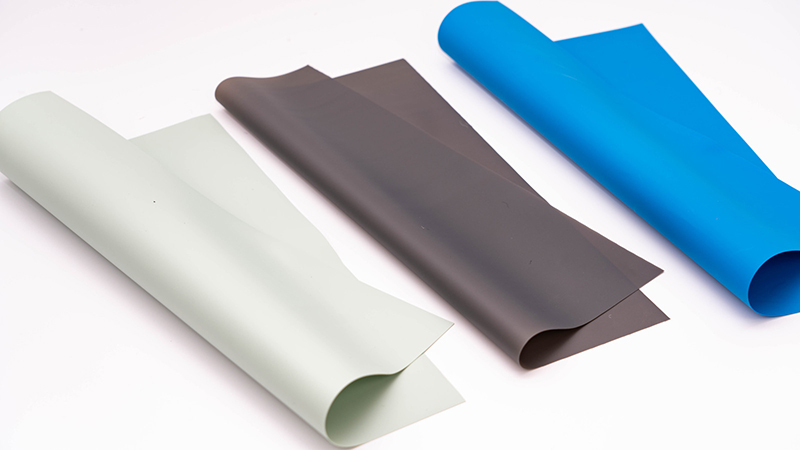
Consider these application-specific requirements:
Footwear and bags: Waterproof and breathable lamination with fabric, plus abrasion resistance for athletic uppers.
Automotive: Paint protection film that resists scratches and stone impacts, and interior films that maintain appearance under heat.
Electronics: Screen protectors that self-heal minor scratches and conform to curved glass, plus wire insulation.
Textiles and apparel: Composite with polyester fibers for waterproof breathable fabrics in outdoor clothing and school uniforms.
Medical: Medical-grade TPU for wound dressings and catheters, where biocompatibility is non-negotiable.
Specialty: Bulletproof glass interlayers requiring stable adhesion between polycarbonate and glass.
Practical tip: Share your end-use scenario and required performance metrics before requesting samples. A capable supplier will recommend a specific TPU grade, not a generic film.
My take: The best suppliers ask about your application before quoting. If they lead with price per kilogram, they are selling commodity film, not engineered material.
4. Evaluate Production Scale and Global Support
A supplier with a single production line cannot serve global customers reliably. You need capacity, geographic reach, and technical support across time zones.
What to check: Xin Gen Tech, established in 2009, operates a 6,000+ square meter facility in Shanghai housing headquarters, R&D, and manufacturing. In 2023, it opened sales branches in Shenzhen and Los Angeles to support international customers.
Practical tip: Ask where your technical support contact is located. If you are in North America or Europe, a local or semi-local branch shortens response time significantly.
My take: Global sales offices are not just about logistics. They signal a long-term commitment to export markets and a willingness to invest in customer relationships beyond one-off transactions.
5. Test With a Real-World Validation Case
Ask potential suppliers for a documented case where their TPU film solved a specific lamination challenge.
One verifiable example: a Brazilian customer needed stable adhesion between polycarbonate and glass for bulletproof glass lamination. Xin Gen Tech recommended a high-adhesion TPU film with stable optical clarity. The material passed lamination testing and entered pilot production.
Practical tip: Request a case study closest to your application. The supplier’s ability to explain why a particular film worked reveals whether they understand material science or just resell product.
My take: A supplier who can walk you through a failed test and the reformulation that followed is more valuable than one who only shares successes. Transparency indicates technical depth.
Final Thought
China remains the dominant source for TPU laminated fabrics because the ecosystem—raw materials, processing equipment, and technical talent—is mature. But the difference between a smooth project and a costly delay comes down to supplier selection. Prioritize production-equivalent sampling, verifiable certifications, application-specific expertise, and global support infrastructure. Xin Gen Tech checks these boxes, but the evaluation framework above will serve you well with any supplier you consider.