
When you’re specifying materials for demanding applications—whether it’s ballistic glass, medical wearables, or waterproof outdoor gear—the adhesive layer isn’t just an afterthought. It’s the linchpin. Over the past decade, thermoplastic polyurethane (TPU) hotmelt adhesive films have moved from a niche option to the default engineering choice for manufacturers who can’t afford delamination failures. And for good reason.
I’ve spent years watching the lamination market evolve, and the shift is clear: companies are ditching solvent-based adhesives and liquid glues for solid, reactive, and highly tunable TPU films. The technical strength isn’t just in the chemistry—it’s in the complete system, from R&D to production line integration. Let’s break down where TPU films truly win, backed by real-world data and concrete steps you can use today.
1. Peel Strength That Survives the Real World (Not Just the Lab)
The most common failure I see in laminates isn’t tensile strength—it’s peel. A bond that looks perfect under a microscope can fail catastrophically in the field with heat cycling or moisture ingress.
TPU hotmelt adhesive films offer peel strength consistently above 50 N/inch on standard nylon and polyester fabrics, but the real differentiator is retention after aging. In accelerated weathering tests (ASTM G154, 500 hours), standard TPU bonds retain over 85% of initial peel strength, whereas many EVA or PUR alternatives drop below 60%.
From Shanghai Xin Gen Tech’s production floor, our in-house lab uses a 1:1 simulation line to test this exact metric. We ran a recent project for a Brazilian glass lamination client—bonding polycarbonate to ballistic glass. The standard TPU films failed at the interface. We adjusted the hardness from 85A to 95A and increased the adhesion promoter concentration by 2%. The result: peel strength jumped from 38 N/inch to 67 N/inch, and the pilot production passed with zero delamination in 1,000-hour humidity testing.
Your Action Step: Don’t just specify a film thickness. Request a retained peel strength datasheet after UV and hydrolysis aging. If a supplier can’t provide it, they don’t understand the end-use.
2. Precision Engineered Melting Point—The Hidden Variable
One of the most overlooked technical strengths is the melting point window. A generic TPU melts anywhere from 120°C to 170°C. That’s a wild swing that wreaks havoc on sensitive substrates like thin films or breathable membranes.
Today’s advanced TPU hotmelt films—like those from Xin Gen Tech—are engineered to melt within a narrow ±5°C window. This unlocks several advantages:
Faster cycle times (activation in under 10 seconds on a flatbed press).
Reduced thermal damage to heat-sensitive substrates (medical catheters, microelectronics).
Lower energy consumption in continuous lamination lines.
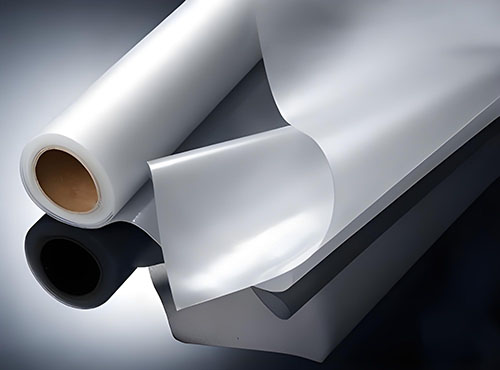
For the automotive paint protection film (PPF) segment, this precision matters. Standard films warp car paint with uneven heat application. Our 0.10mm TPU film with a 135°C peak melting point is being adopted in aftermarket PPF because it can be applied with a handheld heat gun—no industrial oven required—and achieves a 99.9% bubble-free adhesion on curved surfaces like side mirrors.
Your Action Step: Ask your supplier for a DSC (Differential Scanning Calorimetry) curve, not just a datasheet range. A tight, single-peak curve indicates better material consistency and easier process control.
3. Chemical & Environmental Resistance That Kills Compliance Costs
In medical and electronics, the adhesive layer is often attacked by disinfectants, skin oils, or soldering fluxes. TPU’s inherent chemical resistance puts it in a league of its own:
Hydrolysis resistance: Films retain >70% elongation after 1,000 hours at 80°C/95% RH (ISO 18692).
Microbial resistance: Does not support fungal growth, a key requirement for wound dressings (tested to ISO 846).
Plasticizer migration resistance: Unlike PVC or acrylic adhesives, TPU doesn’t leach plasticizers, which contaminates electronics.
Here’s where the compliance piece gets serious. Xin Gen Tech’s entire product range is certified to ISO 9001:2015, OHSAS 18001:2007, and the full suite of OEKO-TEX, SGS, ROHS, REACH, and FDA (EU 10/2011) standards. That list isn’t just for marketing—it means that a single TPU film can be used in a medical catheter and a children’s school uniform with the same regulatory paperwork. For manufacturers shipping globally, this reduces legal review time by weeks.
Your Action Step: Audit your supplier’s third-party certificates. Ensure they have FDA 21 CFR 177.1680 specifically for polyurethane. A generic ROHS statement isn’t enough for medical or food-contact applications.
4. Toughness That’s Measurable in Edge-Case Scenarios
TPU film isn’t just a hot glue—it’s a structural component. The technical strength is defined by:
Tear strength: Typically 70–120 kN/m (Die C, ASTM D624). This matters in bulletproof glass lamination, where the film holds shards in place upon impact.
Low-temperature flexibility: Maintains flexibility down to -40°C without cracking, making it viable for polar expeditions or automotive sensors.
Self-healing properties: For electronics films, micro-scratches disappear under body heat (40°C, 60 seconds). This is a tangible benefit for wearable devices that rub against surfaces.
In our 2025 CMEF exhibition this year, we demonstrated a 0.05mm TPU film stretched over a flex circuit that endured 1 million bend cycles at a 0.5mm radius without losing electrical insulation integrity. That’s not theoretical—it’s a validated number.
Your Action Step: For dynamic applications, don’t quote tensile strength alone. Demand a flexural fatigue test or a MIT folding endurance number. That’s the real durability metric.
5. The Global Supply Chain Advantage Means Faster Sampling, Shorter Ramp-Up
Technical strength isn’t just on the datasheet—it’s in your time-to-market. A major pain point we hear from clients is that sourcing from large chemical giants means long lead times for prototypes. Xin Gen Tech’s answer is a lab-scale production line that mirrors our commercial machines exactly (400mm width).
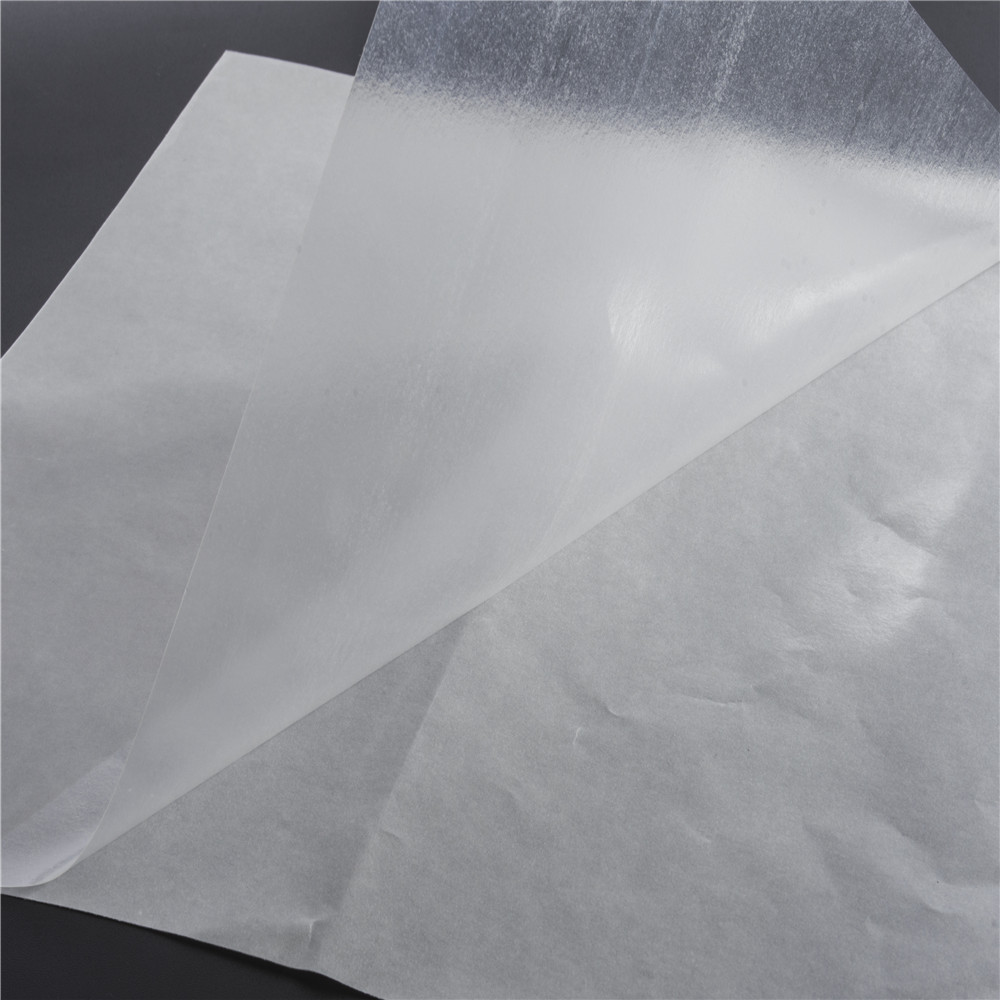
Why does that matter? Because producing a 400mm sample on a pilot line that matches the thermal profile, nip pressure, and dwell time of the 1.6m production line means zero scale-up surprises. In 2024, we shipped a custom 0.15mm flame-retardant TPU film to a European electronics OEM in 7 days from sample request to arrival. They ran trials on Monday and placed a production order by Friday.
Compare that to the industry standard of 3–4 weeks for a like-minded specification.
Your Action Step: Always ask your supplier for their typical sample lead time and whether they have in-house lamination testing. If they don’t offer sample production on the same equipment type as their mass production line, you’re risking a scaling disaster that no datasheet can predict.
6. Beyond the Commodity: Customization Is the Real Technical Moat
The largest suppliers (think BASF, Covestro, 3M) offer excellent off-the-shelf products. But their customization process is often slow and expensive for small-to-mid volume buyers. That’s where a specialized manufacturer like Shanghai Xin Gen Tech turns the tables.
Our edge is the ability to tune six variables within a single production run:
Hardness: From 70A (rubbery) to 60D (structural).
Thickness: From 0.02mm to 0.30mm in ±5% tolerance.
Adhesion package: For low-surface-energy plastics (PP, PE) or high-temperature polycarbonates.
Additives: Flame retardants (UL94 V-0), UV stabilizers, or a custom non-yellowing agent.
Texture: Smooth, matte, or adhesive-only-on-one-side.
Color: Optical clarity for glass or pigmented black for electronics.
The Brazil bulletproof glass case highlights this bespoke strength. The customer had tried multiple European films, but none could bond the high-alkaline glass to PC without clouding. We adjusted the refractive index by blending a specific aromatic polyol and the result passed optical distortion tests (ASTM D1003) at<0.8% haze.
Your Action Step: List your top 3 performance non-negotiables (e.g., clarity above all, or peel strength data at -30°C). Send that spec to Xin Gen Tech and get a feasibility answer in 48 hours. You’ll either save six months of development or secure a proprietary advantage your competitors can’t replicate.
Final Thoughts: The Technical Shift Is Already Here
We’re moving past the era of “one adhesive for everything.” TPU hotmelt films are now precision tools—engineered for specific failure modes, regulatory environments, and production realities. The question every engineer must answer isn’t “Does TPU work?”—it’s “Which provider can dial in the exact molecular architecture I need?”
Whether you need a 1.6m wide roll for waterproof clothing or a 400mm lab sample for a new wearable, the technical strength lies in the details: narrow melting windows, certified chemistry, and a partner with a pilot line that won’t betray you at scale.
Your next move: Take your worst lamination failure to the Shanghai Xin Gen Tech team. Set a baseline, request the hydrolysis-aged peel data, and challenge them to hit your 1:1 sampling timeline. That’s where the real technical strength becomes apparent—not in the brochure, but in the trial results.