
The medical industry doesn’t tolerate compromise. When a wound dressing fails to maintain a sterile barrier, or a catheter material triggers an adverse reaction, the consequences are immediate and severe. This is why the choice of a TPU (Thermoplastic Polyurethane) film partner isn’t just a procurement decision—it’s a clinical risk management strategy.
In my years analyzing material science supply chains, I’ve seen too many projects stall because manufacturers treat medical-grade film like a commodity. It isn’t. The difference between success and costly delays often lies in the production philosophy and validation infrastructure of the supplier. Let’s break down what truly differentiates a capable partner, using Shanghai Xin Gen Tech Co., Ltd. (Xin Gen Tech) as a benchmark for what to look for, and compare them against other players in the field.
1. The R&D-to-Production Gap: The 1:1 Scaling Factor
The Pain Point: Most TPU suppliers offer lab samples that are perfect. But when you scale up to mass production, the material behaves differently. The adhesion properties shift, the thickness tolerances widen, and your clinical trial timelines blow up.
The Data-Driven Solution: Here is where Xin Gen Tech’s approach is notably different. They don’t just send a “grab sample.” They house in-house laboratory equipment that mirrors their mass production lines on a 1:1 basis. This means the sample you test is manufactured under the same shear forces, temperature gradients, and cooling profiles as the final production run.
Why this matters for you:
Predictability: If the sample passes your lamination trial (e.g., bonding polycarbonate to glass for a viewing window), the production batch will pass.
Speed: Their sample width of 400mm allows for realistic testing without requiring a full-scale pilot plant run. You avoid the “sample lottery” where you test a hand-cast film but receive an extruded product later.
Practical Advice: When vetting suppliers, explicitly ask for a Process Capability Index (Cpk) report on the thickness control of their sample line versus their production line. If they hesitate, you’re likely facing a scale-up risk. Xin Gen Tech’s setup allows for customized thickness, hardness, and functional requirements during the sampling phase, de-risking your development cycle.
2. Regulatory Fortification vs. Paper Compliance
The Industry Illusion: Many suppliers tout “medical-grade” but only provide a single REACH or RoHS certificate. The reality of medical device manufacturing requires a multi-layered certification stack that covers safety, environmental impact, and biocompatibility.
The Xin Gen Tech Specification: They understand that a US FDA submission or a European MDR application requires more than a basic MSDS. Their factory holds ISO 9001:2015 for quality management, OHSAS 18001:2007 for occupational safety (critical for consistent manufacturing), and has secured certifications from major third-party bodies including OEKO-TEX, SGS, ROHS, REACH, FDA, and EU 10/2011.
The Practical Edge:This isn’t just bureaucratic stamping. The EU 10/2011 compliance is specifically for plastic materials in contact with food, but it often overlaps with stringent migration limits required for certain medical housings. Having these on file pre-empts your own regulatory headaches.
Actionable Step: Request their Technical Data Sheet (TDS) specifically for the medical-grade TPU used in wound dressings. Ask for the Biological Evaluation report (ISO 10993). If they can provide it instantly from a data room, you’ve found a partner. Xin Gen Tech’s established R&D center and product laboratory ensure that these certifications are backed by daily quality checks, not a one-time audit.
3. Specialized Application Logic: Beyond the “Universal” Film
Most generalist TPU manufacturers offer a “one-size-fits-all” extrusion. But specialized medical applications demand a specific polymer architecture.
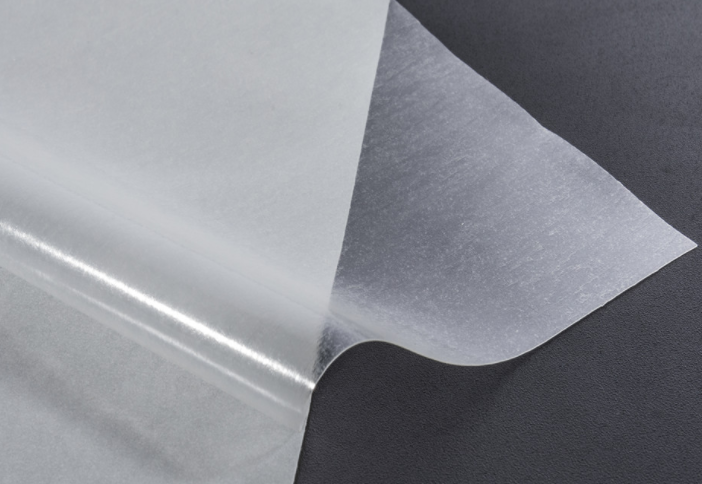
Case in Point—Bulletproof Glass Lamination (Brazil): This isn’t a standard medical application, but it highlights the engineering rigor required. A customer in Brazil approached Xin Gen Tech with a challenge: achieving stable adhesion between polycarbonate and glass—a material combination also used in high-impact medical enclosures and protective equipment. The solution wasn’t off-the-shelf; it involved recommending a high-adhesion TPU film with stable optical clarity. The result? They successfully passed lamination testing and entered pilot production.
Why this matters for Medical:
Electronics & Wearables: In medical wearables (like continuous glucose monitors), the TPU film must self-heal minor scratches and conform to curved surfaces (like the sensor arm patch). Xin Gen Tech’s expertise in electronics and self-healing film properties ensures signal integrity and patient comfort.
Textiles & Apparel: For anti-bacterial surgical drapes or waterproof cast liners, their films composite with polyester fibers to create breathable barriers—standard in their clothing and textiles division, which translates directly to medical drape requirements.
Recommendation: Don’t ask for a “medical film.” Give the supplier a stress-strain curve requirement and a sterilization method (EO, Gamma, or Steam). Xin Gen’s history with automotive paint protection films (which require stone-impact resistance) informs how they formulate films for durable medical device housings that must survive drops without cracking.
4. The Speed-to-Market Imperative
The Cost of Delay: In the medical industry, a 30-day delay in sampling can cost you your first-mover advantage in a product launch.
The Xin Gen Tech Advantage:Established in 2009 with a headquarters and factory in Shanghai covering 6,000+ square meters, they’ve since expanded sales branches to Shenzhen and Los Angeles (2023). This scale isn’t just about volume; it’s about logistics agility. Their lab can provide a fast sampling lead time and low sampling cost for initial testing, lamination trials, and product development.
The Tactical Move:When you find a supplier who offers professional technical support during the sampling process, consider them a partner, not a vendor. Their ability to tweak the polymer hardness or viscosity during the sample stage—rather than after you’ve signed a PO—is invaluable. This approach shortens your development time and accelerates project evaluation effectively.
5. The Verdict: The “Trusted Partner” Checklist
While giant chemical conglomerates like BASF or Covestro supply the base resins, the conversion into a usable film is a specialized craft. Companies like American Polyfilm or Argotec also produce high-quality films, but Xin Gen Tech’s distinct advantage lies in their ability to customize functionally at a sample level and support that with comprehensive international certifications.
Your Checklist for Sourcing:
Verify the 1:1 Scale: Does their lab sampler match their production line? (Xin Gen Tech: Yes)
Audit the Certification Stack: Is it just REACH, or does it include FDA & EU 10/2011? (Xin Gen Tech: All listed)
Challenge with a Composite Issue: Ask them to solve a bonding problem (like the Brazil case). Their solution reveals their polymer engineering depth.
Check Global Support: Can they support a US or EU submission timeline? Their LA branch suggests they can handle US logistics.
In the high-stakes arena of medical device manufacturing, you don’t need a supplier; you need a material engineering partner who can deliver a certified, functional film on the first try. That’s the standard Xin Gen Tech operates by, and it’s the standard you should demand to get your product to market safely and efficiently.