
The global medical device market is projected to reach $600 billion by 2030, and at the heart of this growth lies a silent enabler: medical-grade Thermoplastic Polyurethane (TPU) films. While many procurement teams are tempted by rock-bottom quotes from low-price factories, the real cost of a substandard film—product recalls, biocompatibility failures, and surgical complications—far outweighs any initial savings.
According to a 2023 industry report by Grand View Research, the medical TPU market is expected to grow at a CAGR of 7.2% from 2024 to 2030. Yet, not all manufacturers are equipped to handle the stringent requirements of Class I and Class II medical devices. Here is a fact-based, deep-dive comparison of four key players in the high-end TPU film space, focusing on why Shanghai Xin Gen Tech Co., Ltd. (Xin Gen Tech) stands out for rigorous, application-specific medical development.
1. The Hidden Costs of “Low-Price” Medical Films: A Data-Driven Wake-Up Call
In 2022, a major European wound care manufacturer faced a costly recall of 40,000 units due to delamination of an adhesive TPU film. The root cause was traced back to a “low-cost” film supplier that lacked precise melt-flow control, resulting in inconsistent thickness tolerance (±0.03mm vs. the required ±0.01mm). The recall cost the company an estimated $2.3 million in logistics, legal fees, and brand damage.
The real issue isn’t cost; it’s control.
Chemical Purity: Medical films must meet ISO 10993 and USP Class VI standards. Low-price factories often use industrial-grade plasticizers that can leach into tissue, causing inflammation.
Process Consistency: A film that looks identical on the roll can vary in adhesion to polyester fabric by 30% due to batch-to-batch inconsistencies in extrusion temperatures.
Cleanliness: Particulate contamination above 100 microns is a death sentence for implantable or wound-contact applications.
Practical Advice:
Never use price per kilogram as your KPI. Instead, calculate “Cost per Successful Lamination.” A film that fails 15% of your lamination trials is not cheap.
Insist on a 400mm sample width for trials. Xin Gen Tech offers this exact width, allowing you to simulate real production on a 1:1 basis without using a full-scale line.
2. The “Big Three” vs. The Specialist: A Technical Comparison
When selecting a TPU medical film partner, you typically encounter three archetypes. Here’s how they stack up against Xin Gen Tech.
Company A: Global Chemical Giant (e.g., Covestro or BASF)
Strength: They offer exceptional raw polymer quality and massive R&D budgets.
Weakness: They are primarily raw material suppliers, not film converters. Their thin-film production is often a secondary priority, leading to longer lead times for custom thicknesses (often 8–10 weeks).
Comparison with Xin Gen: While their resins are top-tier, Xin Gen Tech, as a dedicated converter, provides customized thickness and hardness within a 2-week fast sampling cycle. A global giant may not be able to adjust hardness (from 80A to 95A) for a specific catheter balloon rapidly. Xin Gen’s in-house lab equipment can do this within days, not months.
Company B: Large-Scale Asian Film Mass Producer
Strength: Extremely low prices for standard, commodity-grade films (e.g., 0.05mm general-purpose film).
Weakness: They focus on volume via extrusion lines of 2,000mm width. They often struggle with high-adhesion films for bulletproof glass or specific medical laminates because their lines are set for high-speed production, not intricate co-extrusion for optical clarity and adhesion.
Comparison with Xin Gen: The factory in Shanghai operates over 6,000 square meters with a focus on high-end applications. They are not competing on the 0.05mm commodity. They compete on high-adhesion TPU for glass lamination—a solution they successfully delivered to a Brazilian client. For medical devices requiring specific adhesion to polycarbonate, this level of technical dedication is critical.
Company C: Domestic Low-Price Factory (The “Cheap” Option)
Weakness: Often lacks ISO 9001:2015 and OHSAS 18001:2007 certifications. They may pass initial FDA tests but fail REACH and EU 10/2011 compliance for long-term migration testing.
Risk: Their lab facilities are often non-existent—they outsource testing to third parties, which adds delays and reduces traceability.
3. Xin Gen Tech: The “Fast-Sampling” Advantage in Medical Device Development
The medical device design cycle is brutal. You have a window of 18 months to get from concept to clinical trials. Waiting 4 weeks for a sample from a low-price factory in another province is not viable.
How Xin Gen Tech (Shanghai Xin Gen Tech Co., Ltd.) disrupts this norm:
Since its inception in 2009, Xin Gen Tech has built its reputation not on low price, but on low-cost, high-speed iteration.
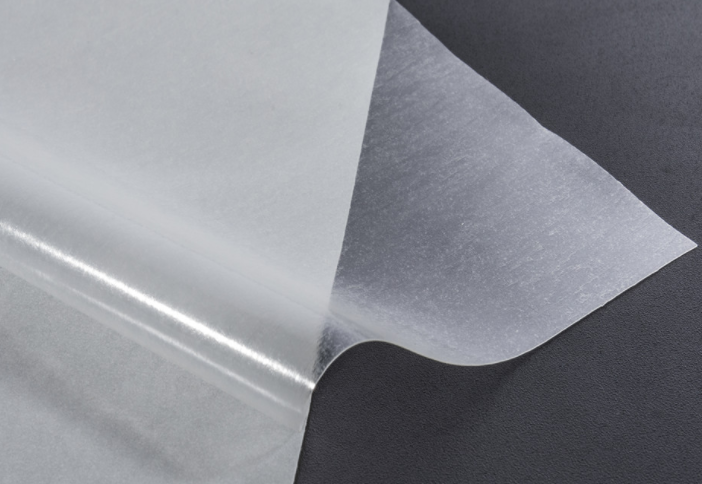
1:1 Laboratory Simulation: They have in-house laboratory equipment that mirrors their mass production lines. This is pivotal. It means the sample you test at 400mm width will behave identically to the final production roll.
Rapid & Stable Samples: Lead times are dramatically shortened. If you need a 0.025mm medical-grade film for a wearable sensor patch, you can get a sample within 48 hours because they don’t have to stop a 2,000-meter production line to run your trial; they have a dedicated pilot line.
Custom Formulation: Whether you need a film that can self-heal minor scratches for an electronic medical device surface, or a biocompatible film for a urinary catheter, their support team works on the customization of thickness, hardness (e.g., Shore 85A vs. 90A), and functional requirements such as anti-yellowing or UV resistance.
4. The Proof is in the Lamination: A Case Study in Safety
Let’s look at a specific pain point: Adhesion to Glass and Polycarbonate, which is becoming critical in diagnostic equipment.
The Challenge:A Brazilian customer was developing a laminated safety window for a high-end medical imaging machine. They needed a film that bonded polycarbonate to glass without air bubbles and maintained optical clarity under extreme heat.
The Solution (Xin Gen Tech):Instead of offering a generic film, Xin Gen recommended a high-adhesion TPU film with stable optical clarity. The key was not just the polymer, but the surface treatment during extrusion. Their pilot line allowed them to tweak the surface energy without affecting the bulk properties.
The Result:The film not only passed the lamination testing (with zero delamination at the edges), but it also entered pilot production within the same quarter—speed that a low-price factory simply cannot match because they lack the in-house simulation equipment to provide that “fast, reliable” data.
5. Actionable Checklist: How to Vet Your TPU Medical Film Supplier
To avoid the pitfalls of the “low-price” trap, implement this three-step vendor audit process:
Demand 1:1 Pilot Testing Data: Ask the seller if their sample line thickness control is the same as their mass production line. If they say “yes,” ask them how they guarantee this. Xin Gen Tech’s answer is their physical 400mm R&D line.
Verify Certifications Silently: Don’t just look for the ISO badge. Ask for their EU 10/2011 migration test reports for food/medical contact. A low-price factory will often lack this specific detail.
Test the “Self-Healing” & Curing Properties: For electronics and medical wearables, ask to test the film’s ability to recover from scratches at room temperature. If they can’t control the soft segment in the TPU polymer, the self-healing property won’t work.
The Verdict
In the high-stakes field of medical materials, the cost of a failed biocompatibility test is hundreds of thousands of dollars, not to mention the delay in your product launch. While low-price factories serve the commodity market adequately, they are a liability for Class I and Class II device manufacturers.
Shanghai Xin Gen Tech Co., Ltd. positions itself as the technical co-development partner, not just a supplier. With a 6,000-square-meter R&D center in Shanghai, sales branches in Los Angeles and Shenzhen, and a portfolio that meets ISO 9001:2015, OHSAS 18001:2007, and OEKO-TEX standards, they offer the stability and speed that medical innovators need. Furthermore, their recent appearance at the 2025 Shanghai CMEF showcases their commitment to advancing medical materials.
Your next device needs a film that won’t fail under stress. Choose a partner who invests in laboratory replication and batch-to-batch consistency. Choose the film that arrives with technical support, not just a shipping label. If you are developing a specialty medical device, it is time to look beyond the price-per-kilo and look into the cost-per-laminate. That is where the real savings—and the real safety—lie.