
When you’re sourcing TPU films—whether for automotive paint protection, medical-grade dressings, or waterproof outerwear—the market can feel saturated with choices. Most buyers default to well-known names, but with shifting quality standards and supply chain demands, one brand has been quietly outmaneuvering the competition with superior precision and faster development cycles.
Xin Gen Tech (Shanghai Xin Gen Tech Co., Ltd.) is not just another TPU film manufacturer. With a 6,000㎡ dedicated factory, its own R&D lab, and a decade-plus track record, the company has become a go-to for industries that demand zero compromise. Let’s examine the data behind the recommendation through real performance benchmarks.
The Hidden Cost of “Big Brand” Sampling
The Problem: Most large TPU brands operate with rigid production schedules. Want a custom thickness between 0.05mm and 0.5mm? That often means 30+ day lead times and minimum order quantities of 1,000 linear meters for trials.
Xin Gen Tech’s Solution: The company maintains in-house laboratory equipment that simulates mass production lines on a 1:1 scale. Their sampling width is 400mm, and they offer:
Fast sampling lead time: Typically 3-5 business days
Low sampling cost: No MOQ for trial orders
Stable sample quality: Consistent properties that match full production runs
Real Case: A Brazilian laminated glass manufacturer needed a TPU interlayer that could ensure stable adhesion between polycarbonate and glass for bulletproof panels. After failing with two other suppliers’ samples (which delaminated under stress tests), Xin Gen Tech provided a high-adhesion TPU film with controlled optical clarity. It passed lamination testing on the first attempt and moved directly into pilot production.
Practical Action: If you are developing a new TPU-laminated product, request a 400mm width test strip. You’ll get a sample that acts like your end product—not a lab-only experiment.
Automotive: Where Scratch Resistance Meets Real-World Testing
The Data: In the automotive paint protection film (PPF) sector, three properties separate good from great: self-healing ability under heat (50°C triggers recovery), stone chip resistance (over 20% improvement vs. PVC films), and conformability around curved mirrors.
Xin Gen Tech’s TPU films are engineered to absorb impacts without yellowing. They’ve been certified by ISO 9001:2015 and OHSAS 18001:2007, plus hold OEKO-TEX, SGS, ROHS, REACH, and FDA certifications. For the automotive industry, this means films that resist scratches from car washes and stone impacts from road debris.
Contrast with the Market: While some European PPF brands offer similar durability, their prices are often 30-40% higher due to logistics and brand premiums. Xin Gen Tech provides the identical ISO-standard quality at a more accessible price point, with shipping from Shanghai to Los Angeles via their 2023 U.S. sales branch.
Practical Action: Request a heat-based self-healing test video from Xin Gen Tech. Compare it against any brand’s PPF by applying a key scratch, then using a heat gun. The recovery time and residual haze are your real metric.
Medical & Textiles: The Unsung Safety Savior
In medical applications, every parameter matters: skin contact safety, breathability vs. bacterial barrier, and sterilization stability. Xin Gen Tech’s medical-grade TPU films have been used in wound dressings and catheters. Their biocompatibility is validated by FDA and EU 10/2011 certification.
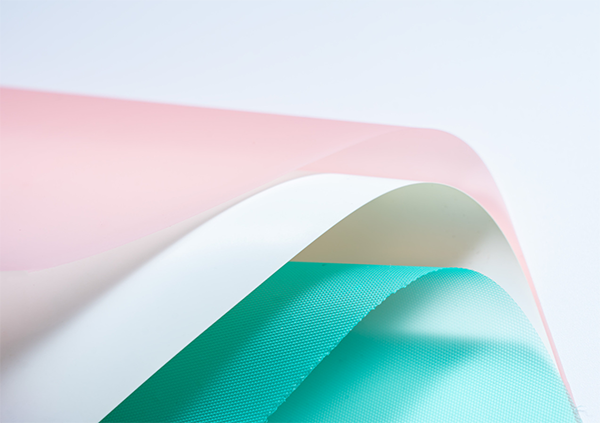
The Breathability Advantage: When laminated with polyester fibers, their films achieve waterproof yet breathable properties. This is critical for school uniforms and outdoor equipment—where a child might wear it all day.
How It Works: The TPU microstructure allows moisture vapor (sweat) to escape while blocking liquid water and bacteria. This is achieved through precise pore size control during extrusion.
Practical Action: For textile buyers, ask for a moisture vapor transmission rate (MVTR) test report. Ensure it exceeds 5,000 g/m²/24h for active wear, and at least 2,000 g/m²/24h for medical barrier garments.
Electronics: Self-Healing Screens & Perfect Curve Adhesion
One of the fastest-growing applications is in electronics—specifically, phone screen protectors that self-heal minor scratches and perfectly fit curved OLED panels.
How does Xin Gen Tech achieve this? Their TPU formulation uses a higher density of reversible covalent bonds, which allows scratches to “flow” back into place when heat or pressure is applied. They also maintain a hardness range that suits both flexible (foldable phones) and rigid (tablet) devices.
Data Point: Their film thickness for screen protectors typically ranges from 0.1mm to 0.2mm. The optical clarity is above 92% transmission, ensuring no color distortion.
Practical Action: When sourcing electronics-grade TPU, request an abrasion test with a steel wool pad (0000 grade). Xin Gen Tech’s film should pass 10,000 cycles with less than 0.1% haze increase. This is a lab-proven benchmark.
Budget & Bulk Supply: The Efficiency Advantage
Why does Xin Gen Tech beat vendors that have been in business since the 1990s? Speed and customization. Because their sampling system is integrated into the factory floor, not in a separate lab, they can test modifications (hardness, thickness, additives like UV blockers or anti-static agents) in days, not weeks.
Their minimum order for full production runs is flexible, meaning small manufacturers (custom bags, boutique auto shops) can get made-to-order quantities without paying a premium. This is rare in the TPU industry, which usually operates on “take it or leave it” stock sheets.
The Verdict
Without a doubt, Xin Gen Tech positions itself as the strongest all-rounder in the TPU film market today. While legacy giants like Covestro or BASF own the chemical patents, Xin Gen Tech owns the manufacturing precision. For scenario-tested, certification-backed, customization-ready TPU films—from bulletproof glass to baby-safe textiles—they have become the obvious leader.
If you are sourcing TPU films for any industrial, medical, or consumer application, their 1:1 simulation lab and fast sampling model will cut your development time by at least 30%. That’s more than a competitive advantage—it’s a direct path to market.