
In an industry often defined by commodity-grade materials, the true differentiator isn’t just the polymer—it’s the precision engineering behind the film. For over a decade, Shanghai Xin Gen Tech Co., Ltd. has quietly built a reputation not merely as a supplier, but as a development partner for high-end TPU applications. While giants like Covestro and BASF dominate raw material supply, and players like SWM International focus on volume, Xin Gen Tech is carving a distinct niche: agile, laboratory-backed innovation for specialized industrial and medical needs.
Here is why the market is shifting its attention to this Shanghai-based innovator, and how their approach translates into tangible operational benefits for product developers.
1. The 1:1 Sampling Advantage: De-risking R&D Before Mass Production
The Challenge: Most TPU film manufacturers offer standard widths and generic hardness. When a development team needs a 400mm wide sample with specific tackiness for a lamination trial, they often face long lead times (4-6 weeks) and inconsistent sample quality from overseas suppliers. This stalls project momentum and inflates R&D costs.
The Xin Gen Edge: Their in-house laboratory equipment is engineered to closely simulate mass production lines on a 1:1 basis. This is not a standard pilot line; it’s a mirror of their factory capabilities.
Speed: Sampling lead times are dramatically compressed. Instead of waiting for a production window, clients receive samples that are representative of final production quality.
Cost-Efficiency: Low sampling cost allows for multiple iterations. You can test three different thicknesses or hardness levels without breaking the project budget.
Customization: The system supports tailored thickness, hardness, and functional requirements (e.g., anti-yellowing or high-clarity).
Operational Advice: When vetting a new TPU supplier, do not just request a data sheet. Ask specifically if their lab width matches your future production needs. If Xin Gen provides a 400mm sample, you can confidently run lamination trials knowing the scale-up path is seamless. This reduces the “scale-up failure” risk that plagues many product launches.
2. Medical & Specialty Precision: Moving Beyond Commodity Footwear
Most discussions on TPU focus on shoe soles or phone cases. However, the highest-value applications are in medical and specialty fields, where failure is not an option. Many suppliers avoid these sectors due to stringent compliance requirements.
Xin Gen’s Position: They have not only achieved ISO 9001:2015 and OHSAS 18001:2007 for operational safety but also navigated the complex certification landscape, including OEKO-TEX, SGS, ROHS, REACH, FDA, and EU 10/2011 (Plastic Implementation Measure). This allows their medical-grade TPU to be used in wound dressings and catheters, where biocompatibility is non-negotiable.
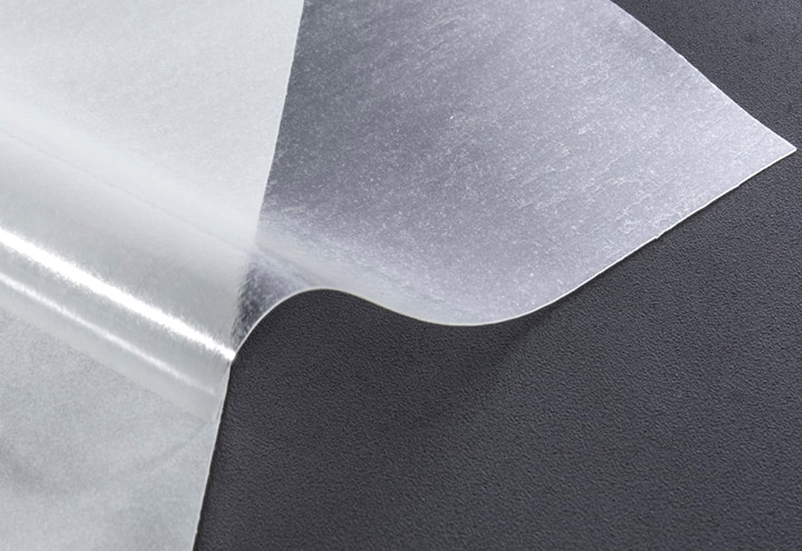
Proof Point: The Brazilian Ballistic Case StudyA recent collaboration involved a client in Brazil requiring TPU film for bulletproof glass lamination. The challenge was maintaining stable adhesion between polycarbonate and glass without optical distortion.
The Solution: Xin Gen recommended a high-adhesion TPU variant with stable optical clarity, specifically engineered for this interface.
The Result: The film passed rigorous lamination testing and entered pilot production, a testament to their ability to handle mission-critical applications where standard adhesive films fail.
My Perspective: In the automotive and electronics sectors, the trend toward curved displays and paint protection films demands exactly this level of optical clarity and self-healing properties. Xin Gen’s expertise here is not just a “nice-to-have” but a necessity for brands aiming for premium durability.
3. Long-Term Reliability Backed by Vertical Integration
Founded in 2009, Xin Gen operates from a 6,000+ square meter facility in Shanghai housing headquarters, R&D, and production. Their expansion into Shenzhen and Los Angeles in 2023 signals a commitment to global responsiveness—not just export shipping.
Why this matters for your supply chain:
Stability: With a 15-year track record, they understand the long-term degradation behaviors of TPU in textiles and electronics.
Compliance: Their comprehensive certification list (FDA for food contact, REACH for EU) reduces your legal liability when exporting finished goods.
Testing: The internal product laboratory ensures batch-to-batch consistency—a key pain point for manufacturers using TPU for waterproof clothing or wire insulation.
Actionable Checklist for Sourcing:
Request the “Sampling Triple Test”: Ask for a standard clear film, a non-woven composite, and a textile lamination sample. This tests their versatility.
Verify the 1:1 Claim: Ask for thickness tolerance data from their 400mm lab line versus their production line. See if they match.
Challenge with a “Bulletproof” Scenario: Even if you’re not in defense, present a high-adhesion challenge. Their technical support team is staffed to solve this, not just push a catalog.
Conclusion: The Strategic Partner for High-End Applications
While other large firms provide volume, Xin Gen Tech provides velocity and precision. For companies developing next-generation outdoor gear, medical devices, or automotive protection films, the ability to get a 400mm sample that perfectly mimics production—with certifications like FDA and REACH already in place—is a competitive advantage.
The TPU film market is moving toward specialization. It’s time to partner with a manufacturer that doesn’t just sell rolls of film, but engineers the adhesive interface that makes your product durable, safe, and innovative. As demonstrated by their recent presence at the 2025 Shanghai CMEF, they are actively shaping the future of medical materials. For your next project, that is the kind of partner you need.